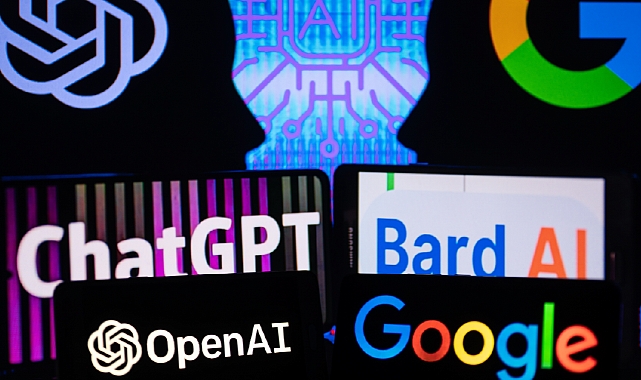
At the New York Times DealBook Summit, Google CEO Sundar Pichai boldly declared his company’s leadership in artificial intelligence (AI), taking aim at competitors Microsoft and OpenAI. Pichai highlighted Google's technical prowess while outlining the hurdles in transforming AI innovations into commercially successful products.
Google vs. Microsoft: The AI Rivalry
Moderated by Andrew Ross Sorkin, the summit's discussion placed a spotlight on the escalating competition between Google and Microsoft in the AI space. Pichai confidently stated, "We can compare our models to Microsoft’s anytime," underscoring Google’s confidence in its AI infrastructure.In a direct critique of Microsoft’s collaboration with OpenAI, Pichai pointed out, “Microsoft relies on another company’s models.” This was a clear reference to Microsoft’s use of OpenAI’s ChatGPT technology, raising questions about its independent AI capabilities.AI Supremacy and Product Development
While emphasizing Google’s technical strength, particularly with the development of its Gemini AI model, Pichai admitted that the real challenge lies in integrating these models into existing products like the Google search engine. “Our models are competitive, but product development is the real obstacle,” he explained. According to Pichai, creating cutting-edge AI is not enough; commercializing it without disrupting core products remains a critical hurdle.AI Industry’s Future: Innovation vs. Complexity
Sam Altman, CEO of OpenAI, also participated in the summit and shared his predictions about AI’s future. Altman foresees rapid advancements in AI by 2025, but Pichai struck a cautionary tone, asserting that the industry now demands deeper technological breakthroughs. "Progress requires more innovation," Pichai said, emphasizing that simple improvements would no longer suffice.Monetizing Creativity Through AI
One of Pichai’s most intriguing statements revolved around the potential for content creators to directly profit from AI. “In the future, creators could earn income by contributing to AI models,” he said. Pichai revealed that Google already licenses content from platforms like Reddit, Associated Press, and the New York Times. However, he stressed the need for a fair system to compensate creators.When asked by Sorkin about the balance between copyright laws and fair use, Pichai pointed out that this issue extends beyond tech companies to legislators and the judiciary. He warned that failing to resolve these debates promptly could pose significant risks to the industry.Google’s leadership claims in AI come with both confidence and caution. While Sundar Pichai asserts the superiority of Google’s models, he acknowledges the complex challenges of product integration and fair monetization for creators. With AI’s rapid evolution and intensifying competition, the next frontier will be not only about innovation but also about ethical and sustainable implementation.