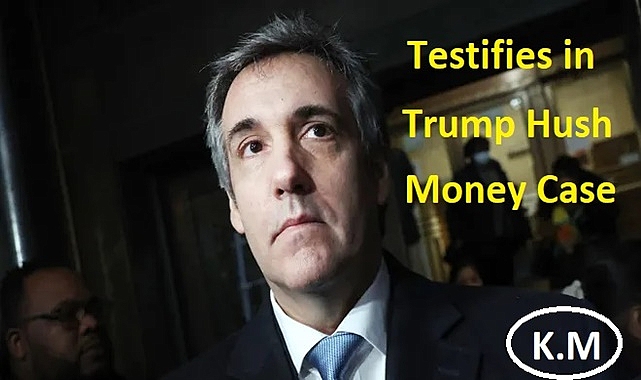
On Monday, in New York, Michael Cohen took the witness stand in the hush money case involving Donald Trump.
When he was Trump's personal attorney, Cohen admitted to making a $130,000 payment to adult film actress Stormy Daniels before the 2016 elections. He was sentenced to federal prison for this transaction, as it violated campaign finance laws.
Through the testimonies of previous witnesses, the jury gained considerable insight into Cohen. They painted a negative portrait of him as aggressive, impulsive, and unlikable. The former "fixer" now stands as a critical witness, detailing the payment and Trump's alleged involvement.
Here are some key points from Cohen's testimony today:
Relationship with Trump: Cohen stated that he worked directly for Trump, not for the Trump Organization's general counsel office. He said that dealing with the press was "part of the job" and that he sometimes called news outlets to censor or remove articles. Cohen emphasized the importance of keeping Trump informed about his actions.
Regarding the presidential race: Cohen mentioned that Trump was concerned about personal stories surfacing as he contemplated running for president. Cohen quoted Trump as saying, "Just be prepared, a lot of women are going to come out." He stated that he had no official role in the 2016 campaign but used press contacts to act as a representative.
The doorman story: Cohen revealed that he learned about the doorman story alleging Trump fathered a love child and that Trump told him to "take care of it." He confirmed that the $30,000 strategy was to "take it off the market," and Trump was grateful that it wouldn't be published. Cohen said he went to Trump to inform him that the deal was completed and to receive credit for accomplishing it.
Karen McDougal: Cohen said Trump wanted to ensure that the story about former Playboy model Karen McDougal didn't get published, believing it would secure her silence. Cohen recounted a phone call about the story with Pecker and Trump. When Cohen mentioned the cost of controlling the McDougal story to Trump, Trump allegedly said, "No problem, I'll take care of it." Later, David Pecker, former CEO of the National Enquirer's parent company, spoke with Cohen and demanded reimbursement.
"Access Hollywood" tape: Cohen said that when he learned the tape was going to be released by The Washington Post, he wanted "things to be handled properly" and Trump protected. He stated that calling the language on the tape "locker room talk" was Melania Trump's idea. Cohen recalled thinking the tape could impact female voters.
Stormy Daniels: When Cohen initially told Trump about the Stormy Daniels story, he claimed Trump said, "Women aren't going to like me" and that it would be a "disaster" for the campaign. Cohen stated that his former boss collaborated with Pecker. As the agreement progressed, Cohen maintained that he followed up on the agreement with Daniels.
Timing of Daniels' payment: According to Cohen, Trump said Daniels' situation could wait until after the election because "if I win, I won't be president, so it doesn't matter. And if I lose, I don't care."
Making the payment: Cohen said he spoke to Trump twice to get approval before making the payment to Daniels. He stated he wouldn't go to the bank without Trump's approval. Cohen also claimed to have informed Trump after signing the agreement with Daniels.
Reimbursement to Cohen: Trump Organization CFO Allen Weisselberg allegedly told Cohen he would be reimbursed $420,000 over 12 months for the Daniels payment. Cohen stated that the payment series set up for future legal services was, in fact, a reimbursement.
This testimony provides significant insight into the complex relationships and transactions in Trump's hush money case. Cohen's statements could offer further understanding of Trump's actions during the campaign and have a significant impact on the case.