The world's oceans and seas are home to a diverse array of ecosystems, each with its own unique characteristics and challenges. Among these, the Red Sea stands out due to its extreme temperatures and salinity levels, creating an environment that seems inhospitable to many forms of life. Yet, within this harsh marine environment, a remarkable forest thrives, showcasing the resilience and adaptability of nature.The Red Sea: An Overview
The Red Sea, situated between Africa and Asia, is known for its warm waters, which can reach temperatures as high as 30°C (86°F). This sea is also one of the saltiest bodies of water in the world, with salinity levels averaging around 40 parts per thousand, compared to the global ocean average of 35. Despite these challenging conditions, the Red Sea is teeming with life, including a unique underwater forest.The Mangrove Forests
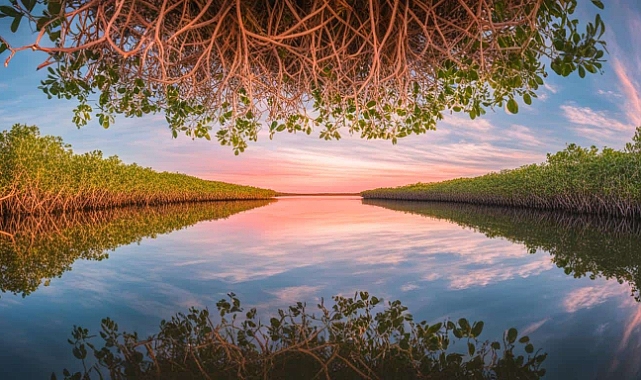
The forest in question is not composed of traditional trees but rather mangroves, a group of salt-tolerant trees and shrubs that thrive in coastal intertidal zones. Mangroves play a crucial role in coastal ecosystems, providing habitat and nursery grounds for many marine species, protecting shorelines from erosion, and contributing to carbon sequestration.Adaptations to Extreme Conditions
Mangroves in the Red Sea have developed remarkable adaptations to survive the extreme conditions. Their roots are specially adapted to filter out salt and access freshwater from seawater. These roots also provide stability in the loose, muddy sediments typical of coastal areas. The leaves of mangrove trees excrete excess salt, often visible as white crystals on their surfaces.Biodiversity and Ecological Importance
The mangrove forests of the Red Sea support a rich diversity of life. They provide breeding and feeding grounds for various fish, crustaceans, and mollusks. Birds, including herons and egrets, rely on these forests for nesting and foraging. Additionally, mangroves act as natural barriers, protecting coastal areas from storm surges and wave action.Threats and Conservation Efforts
Despite their ecological importance, mangrove forests face numerous threats. Coastal development, pollution, and climate change pose significant risks. Rising sea levels and increasing temperatures can alter the delicate balance these forests depend on. Conservation efforts are underway to protect and restore mangrove habitats in the Red Sea. Organizations and governments are working together to implement sustainable practices and raise awareness about the importance of these ecosystems.The mangrove forests growing in the world's hottest sea, the Red Sea, are a testament to the resilience of nature. These unique ecosystems not only survive but thrive in extreme conditions, providing critical ecological services and supporting a wide range of biodiversity. Protecting and conserving these forests is essential for maintaining the health and stability of our planet's coastal environments. Through collective efforts, we can ensure that these remarkable forests continue to flourish for generations to come.