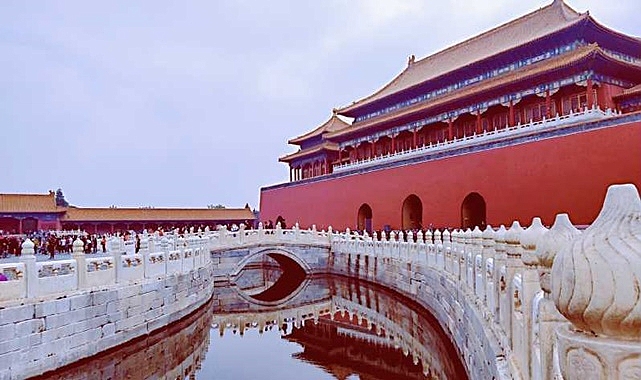
Nearly a century has passed since the Forbidden City in Beijing opened its doors, yet many mysteries about its past remain—especially regarding the diet of its imperial inhabitants.
In 1420, during the Ming Dynasty, while Europe was entangled in the Hundred Years' War, the Chinese ruler moved into his new palace, fortifying his control over an expanding empire. The Forbidden City was so named due to its restricted access; few were allowed inside its walls. It wasn't until 1924, when the last emperor was expelled, that the world began to learn more about the secrets hidden within.One enigma that persists today concerns the food consumed by the imperial families. Despite the ongoing efforts of historians, much about the early diets of these royals remains unknown. Zhao Rongguang, a food historian from Heilongjiang, is among the few who have studied the relevant ancient documents, which are now sealed due to their delicate condition.Starting his research in the 1980s, Zhao faced significant challenges: the pervasive secrecy of the palace and the scarcity of detailed records about imperial cuisine. He diligently worked through summers at the First Historical Archives of China, slowly piecing together the culinary history of the Forbidden City. Zhao's research highlights three pivotal figures in shaping royal eating habits, beginning with Emperor Kangxi of the Qing Dynasty.During Kangxi's reign (1661-1722), traditional foods from the Manchu heartlands dominated the imperial menu, including some unusual items like tiger testicles, believed to enhance libido, and rooster combs. As the era progressed, the royal diet began to incorporate more Han Chinese dishes, reflecting a blend of cultural influences.Qianlong Emperor, Kangxi’s grandson, ruled from 1735 to 1796. His meticulously recorded menus provide a clearer picture of palace life. During his reign, imperial cuisine became more diverse, featuring a mix of Manchu and Han dishes. Qianlong's meals often included game such as Sika deer tail and sophisticated dishes like bird’s nest soup, believed to be highly nutritious.Qianlong had two main meals per day and additional snacks, often dining alone except for evening meals with consorts. Despite his access to the finest ingredients, his diet was not excessively lavish, reflecting a disciplined upbringing focused on health.A common misconception is the extravagant nature of imperial banquets, such as the rumored Manchu-Han Banquet. This myth was popularized during the Qing Dynasty and perpetuated through cultural exhibitions and media. However, historical records indicate that these feasts were more moderate, typically featuring around 28 dishes, contrary to the 108-dish legend.Empress Dowager Cixi, who controlled China until 1908, is often associated with the opulence of the Qing Dynasty's later years. Her era saw an increase in the number of courses at meals and the integration of ceremonial feasts, combining Manchu and Han culinary traditions.Zhao’s motivation for studying food history stems from his experiences during the famine of the late 1950s. His research aims to preserve cultural heritage and contribute to a better understanding of food security.Through decades of meticulous work, Zhao Rongguang continues to unravel the culinary secrets of Beijing's Forbidden City, offering valuable insights into a once-mysterious world.